Source unisex eva sandals sheet for Soles, Sports, and Office
Compare 30 listings for unisex eva sandals sheet from verified Chinese manufacturers. Buyers can evaluate tensile strength, hardness, and customization options for shoe soles, sports products, and office applications; compare the available evidence and request quotations based on your requirements.
Key considerations
Products List


Comprehensive Sourcing Guide
Unisex Eva Sandals Sheet Sourcing Guide
Sourcing EVA foam sheets for unisex sandals requires careful attention to material consistency and supplier transparency. The market offers a wide range of options, from standard beige and black sheets to custom-colored variants, but buyers must distinguish between generic listings and verified production capabilities. Many suppliers list Zhejiang and Fujian as primary origins, indicating a concentrated manufacturing hub in China. This geographic clustering can streamline logistics but also necessitates rigorous due diligence to ensure that the quoted samples match the bulk production quality. Buyers should prioritize suppliers who provide clear evidence of their manufacturing processes rather than relying solely on product images or generic descriptions.
Understanding the specific application of the EVA sheet is critical for selecting the right grade. While some listings suggest use in office settings, the primary industrial application for these materials is in footwear soles and sports products. The material’s inherent properties, such as shock absorption and buoyancy, make it ideal for comfortable, lightweight footwear. However, not all EVA sheets are suitable for direct skin contact or high-wear applications. Procurement teams must verify the hardness and tensile strength specifications to ensure the material can withstand the mechanical stresses of daily wear. Ignoring these technical nuances can lead to premature product failure and customer dissatisfaction in the final retail market.
Product Scope and Observed Listing Signals
The observed market data reveals a significant variance in pricing and minimum order quantities, ranging from $0.26 to $150 per unit with MOQs between 2 and 2,500 pieces. This wide spectrum suggests a mix of sample orders, small-batch customizations, and large-scale industrial supply. Buyers should interpret low MOQs as opportunities for prototyping rather than indicators of bulk pricing efficiency. Conversely, higher MOQs often correlate with better unit economics but require greater capital commitment. The presence of OEM/ODM acceptance indicates that many manufacturers are equipped to handle custom branding and design requirements, which is essential for brands seeking unique market positioning.
Product attributes vary considerably across listings, with some specifying exact dimensions like 0.3*1.45m while others offer customized sizes. Hardness levels are reported in conflicting ranges, from 30-45 degrees to 20-80 degrees Shore C, highlighting the need for precise specification alignment. Some suppliers list tensile strengths as high as 81-130 MPa, while others cite 30-40 MPa, reflecting different material densities and formulations. These discrepancies underscore the importance of requesting detailed technical datasheets before placing orders. Buyers must also note that packing methods vary from simple plastic bags to more protective OPP bags with color paper, which can impact shipping costs and product integrity during transit.
Technical Specifications to Verify
Hardness and density are the most critical technical parameters for EVA sheets used in sandals. Buyers must confirm the Shore C hardness rating, as variations between 30 and 80 degrees significantly affect comfort and durability. A softer sheet may offer superior cushioning but could lack structural integrity, while a harder sheet might provide better support but feel rigid. Tensile strength is another vital metric, with observed ranges spanning 30 to 130 MPa. This variation impacts the sheet’s resistance to tearing and stretching during the molding and assembly processes. Procurement teams should request specific test reports to validate these claims, ensuring the material meets the mechanical demands of the final product design.
Dimensional accuracy and surface texture also play crucial roles in the manufacturing workflow. Standard sizes like 1.28x1.95m or customized dimensions must be verified against the buyer’s cutting patterns to minimize waste. Surface patterns, such as diamond, dot, or crossed textures, can influence grip and aesthetic appeal, particularly for outsoles. Additionally, water absorption rates between 0.2% and 0.3% indicate the material’s resistance to moisture, a key factor for footwear exposed to various environmental conditions. Buyers should also inquire about contraction percentages, with some suppliers claiming less than 0.4%, to ensure dimensional stability after molding. These specifications directly impact yield rates and final product quality.
Compliance and Safety Documentation
Safety certifications are non-negotiable for footwear materials, particularly those intended for direct skin contact. Suppliers listing SGS and En71 approvals provide a baseline level of assurance regarding chemical safety and physical hazards. These certifications typically cover restrictions on harmful substances like phthalates and heavy metals, which are critical for consumer protection. Buyers must verify the validity and scope of these certificates, ensuring they apply to the specific EVA formulation being supplied. Relying on generic claims without documented proof can expose brands to regulatory risks and potential recalls in international markets.
Environmental compliance is increasingly important for modern consumers and regulatory bodies. Many suppliers highlight their products as eco-friendly, but buyers should seek concrete evidence such as REACH compliance or specific material safety data sheets. While ISO 9001 is mentioned in background data, it represents quality management systems rather than product-specific safety. Procurement teams should also consider BSCI standards for social compliance, ensuring ethical manufacturing practices. Requesting third-party lab test results for specific chemical restrictions adds an additional layer of verification. This diligence protects brand reputation and ensures adherence to global trade regulations.
Cost Drivers and Commercial Terms
Pricing for EVA sheets is influenced by raw material costs, order volume, and customization requirements. The observed price range of $0.26 to $150 reflects these variables, with lower prices typically associated with standard colors and larger quantities. Custom colors and specialized textures often incur additional charges due to setup costs and material waste. Buyers should negotiate tiered pricing structures that reward increased order volumes while maintaining flexibility for smaller, high-margin batches. Understanding the cost breakdown helps in identifying potential savings opportunities without compromising on material quality or supplier reliability.
Lead times and payment terms are key components of the commercial agreement. Production times are estimated at 15-25 working days, depending on order quantity, which requires careful inventory planning to avoid stockouts. Buyers should clarify whether this timeline includes material sourcing, production, and quality control phases. Payment terms often vary based on the relationship with the supplier, with options ranging from upfront deposits to open account arrangements for trusted partners. Additionally, shipping costs and packaging methods can significantly impact the total landed cost. Negotiating favorable logistics terms can enhance overall profitability and supply chain efficiency.
Supplier Qualification and Quality Control
Evaluating supplier capabilities is essential for ensuring consistent product quality. Buyers should assess the manufacturer’s production capacity, equipment modernity, and quality control processes. Suppliers accepting OEM/ODM services likely have flexible production lines capable of handling custom orders, but this flexibility must not come at the expense of consistency. Requesting factory audits or virtual tours can provide insights into their operational standards. Additionally, verifying the supplier’s history and reputation in the industry helps mitigate risks associated with unreliable partners. A robust supplier base is crucial for maintaining steady supply and addressing any production issues promptly.
Quality control measures should be integrated into the procurement process from the outset. Buyers must define clear acceptance criteria for material properties, dimensions, and appearance. Implementing pre-shipment inspections can catch defects before goods leave the factory, reducing the risk of receiving non-conforming products. Suppliers offering free samples allow buyers to evaluate material quality firsthand, but bulk production must match these samples. Establishing a formal quality agreement with defined penalties for non-compliance reinforces accountability. Regular communication and feedback loops with suppliers help maintain high standards and foster a collaborative partnership focused on continuous improvement.
Long-Term Procurement Checks
Building a resilient supply chain requires ongoing monitoring and relationship management. Buyers should regularly review supplier performance metrics, including on-time delivery rates, defect rates, and responsiveness to issues. Consistent performance indicates a reliable partner, while recurring problems may signal underlying operational weaknesses. Diversifying the supplier base can mitigate risks associated with single-source dependencies, ensuring continuity in case of disruptions. Regularly updating technical specifications and market requirements helps keep the supply chain aligned with evolving consumer demands and regulatory changes.
Strategic planning for future needs is equally important. Buyers should anticipate market trends and adjust procurement strategies accordingly, such as exploring new materials or sustainable options. Maintaining open lines of communication with suppliers facilitates early warning of potential issues, such as raw material shortages or capacity constraints. Investing in long-term partnerships can lead to better pricing, priority production slots, and collaborative innovation. By focusing on continuous improvement and risk management, buyers can secure a competitive advantage and ensure the long-term success of their unisex sandal product lines.
FAQs
What is the minimum order quantity for Eva Foam Sheet For Shoe Soles?
The minimum order quantity is 500 pieces for this product. This requirement applies to the Plain EVA sheet model sourced from Zhejiang, China. Buyers should note that production time varies between 15 to 25 working days depending on the specific order quantity placed.
Which certifications does the EVA sheet material hold for safety?
The product holds SGS and En71 approvals for safety and quality assurance. These certifications confirm the material meets specific standards for use in shoe soles and sports products. The material is also marked as eco-friendly and suitable for applications requiring high safety compliance.
Can I request custom colors and designs for the EVA sheets?
Yes, customization is available for colors and designs on the EVA sheets. Buyers can choose from beige, black, white, yellow, or any other color. The product supports OEM and ODM services, allowing for customized patterns like diamond, dot, or crossed designs to meet specific brand needs.
What are the physical specifications for the Plain EVA sheet size?
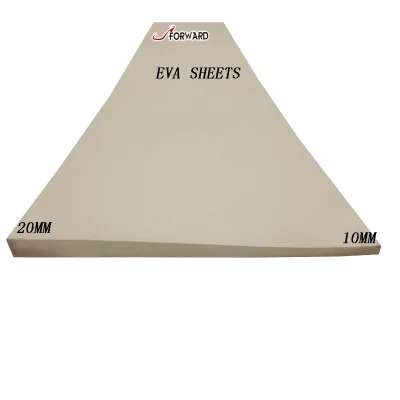
The standard size is 0.3 by 1.45 meters with thickness options of 1.5mm or 2mm. Other standard dimensions include 30x30cm, 60x60cm, and 100x100cm sheets. The material features a hardness range of 30 to 45 degrees Shore C and offers excellent shock absorption properties.
How is the product packed and what is the single package weight?
The product is packed in bags, specifically plastic bags or OPP bags with color paper. The single gross weight is 3.0 kg per package. Packaging options also include rolls or sheets depending on the specific order requirements and the supplier's standard packing practices.
What is the lead time for production of these EVA sheets?
Production time is about 15 to 25 working days for this item. The exact duration depends on the total order quantity placed by the buyer. Samples are available for free, but the full production lead time must be confirmed based on the final order volume and customization needs.
Where is the place of origin for the Forward brand EVA sheets?
The place of origin is listed as Zhejiang, China for the main product line. Some specific models may originate from Fujian or Jinjiang, China. Buyers should verify the specific origin based on the model number and supplier details provided for their specific order requirements.